
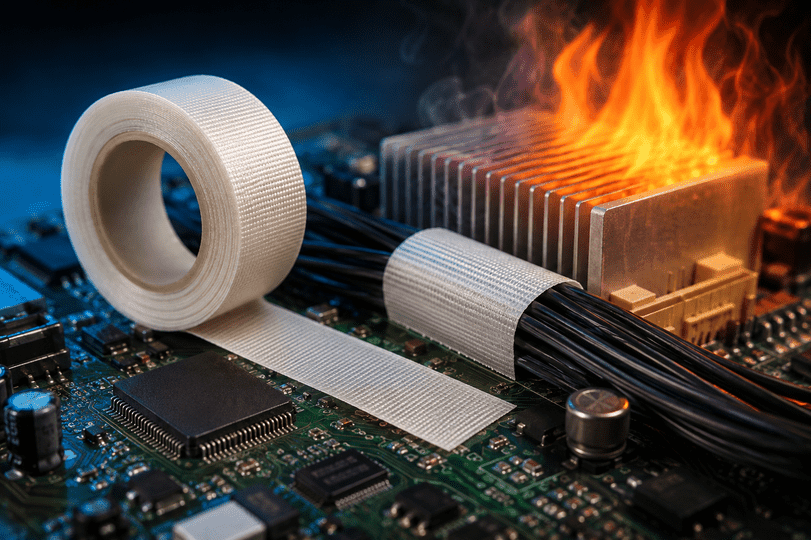
Modern electronic devices pack more power into smaller spaces. As a result, they often produce more heat during use. Batteries, circuit boards, motors, and power parts can all raise the temperature inside a device.
Too much heat can damage insulation and weaken nearby materials. Repeated heating and cooling can also cause stress over time. This is where special polyester tapes can help. Flame-retardant types add useful protection without taking up much space.
What Happens When Electronics Get Too Hot?
Heat can affect many parts of an electronic system. Adhesives may soften, plastic parts may change shape, and insulation may lose strength. These changes can affect how well a device works.
The problem may also build slowly. A device can heat up during use and cool down after it shuts off. When this happens again and again, materials face repeated stress. Good thermal protection helps reduce these risks.
Why Is Polyester Tape Useful?
Polyester tape has a thin film backing that can provide strong electrical insulation. It can help separate conductive parts and protect sensitive areas from unwanted contact.
The thin design is also useful in compact devices. It adds a protective layer without adding much size or weight. For many electronic assemblies, that is a big plus.
How Does Flame Retardancy Help?
Flame retardancy helps reduce the chance that a material will catch fire or help a flame spread. It does not mean that the tape is completely fireproof. Its performance depends on the product and its test rating.
This feature can matter in tightly packed electronics. If one part becomes too hot, nearby materials may also face heat or flames. A suitable flame-retardant tape can help limit that risk and add another layer of protection.
Where Does Thermal Stress Come From?
Thermal stress can come from many sources. Internal parts may create heat during normal use. External heat can also affect an electronic assembly. Batteries, motors, transformers, and power systems are common examples.
Temperature changes can add another layer of stress. A device may warm up during operation and cool down later. These repeated changes can affect materials over time. So, tape selection should match the real working conditions.
Why Does Electrical Insulation Matter?
Electrical insulation helps keep conductive parts apart. Without proper insulation, wires or components may touch when they should not. This can cause short circuits, equipment damage, or other electrical problems.
A polyester film can act as a useful barrier between parts. It can also support wrapping and separation during assembly. When the adhesive suits the job, the tape can stay in place and provide steady protection.
What Makes Flame-Retardant Polyester Tapes Different?
Flame-retardant polyester tapes combine a polyester film with features designed to improve flame resistance. This makes them useful for applications where heat and electrical insulation are both concerns.
These tapes can support tasks such as wrapping, insulation, separation, and component protection. However, not every product offers the same performance. Users should always check the product data before choosing tape for a demanding application.
Can They Handle Repeated Heat?
Electronic devices rarely stay at one temperature. They heat up during use and cool down when power drops or the device shuts off. This cycle may happen many times during the life of a product.
Repeated temperature changes can place stress on insulation and adhesives. A suitable tape can help maintain a stable protective layer. Still, users should check thermal cycling data when the application involves frequent temperature changes.
Why Does the Adhesive Matter?
The tape backing gets much of the attention, but the adhesive is just as important. An adhesive must stay attached under the conditions the tape will face. Heat, moisture, movement, and surface type can all affect its performance.
A tape may have a strong backing but still fail if its adhesive cannot handle the temperature. Therefore, users should review the complete tape system. The backing and adhesive should work well together.
What Benefits Can These Tapes Offer?
Flame-retardant polyester tapes can provide several useful features for electronic applications. Their thin design can help save space, while their film backing can provide electrical insulation.
They can also support flame resistance and surface protection. In addition, tape can be cut, wrapped, and applied with ease. This makes it useful for both production work and some repair tasks.
How Should You Choose the Right Tape?
Start by checking the highest temperature the tape will face. Then consider how long the tape will remain exposed to that heat. These two factors can quickly narrow down suitable options.
Next, check the adhesive, surface, thickness, and flame rating. If the project requires a certain safety standard, review the test data. Do not rely on color or appearance alone. The numbers and specifications tell the real story.
What Should You Check Before Use?
The surface needs attention too. Dust, oil, moisture, and loose material can weaken the adhesive bond. Clean the surface using a method that suits the material, then let it dry before applying the tape.
It is also wise to test a small area first. Check how the tape sticks and how it behaves after heat exposure. This simple step can prevent costly problems during full production.
Protect Sensitive Components with the Right Tape
Sensitive electronics need materials that can handle real-world conditions. Heat, temperature changes, electrical loads, and tight spaces can all create challenges. Choosing the right tape can help manage some of these risks.
For demanding applications, special polyester tapes can provide a useful mix of insulation, flame resistance, and compact protection. The best results come from checking the full product data and matching the tape to the job. A careful choice today can help support better performance and reliability over time.